
Russia wants a divided West that defeats itself
As part of Russia-US talks on settling the war in Ukraine, Moscow is conducting an extensive foreign policy influence operation that extends far beyond a settlement in Ukraine.
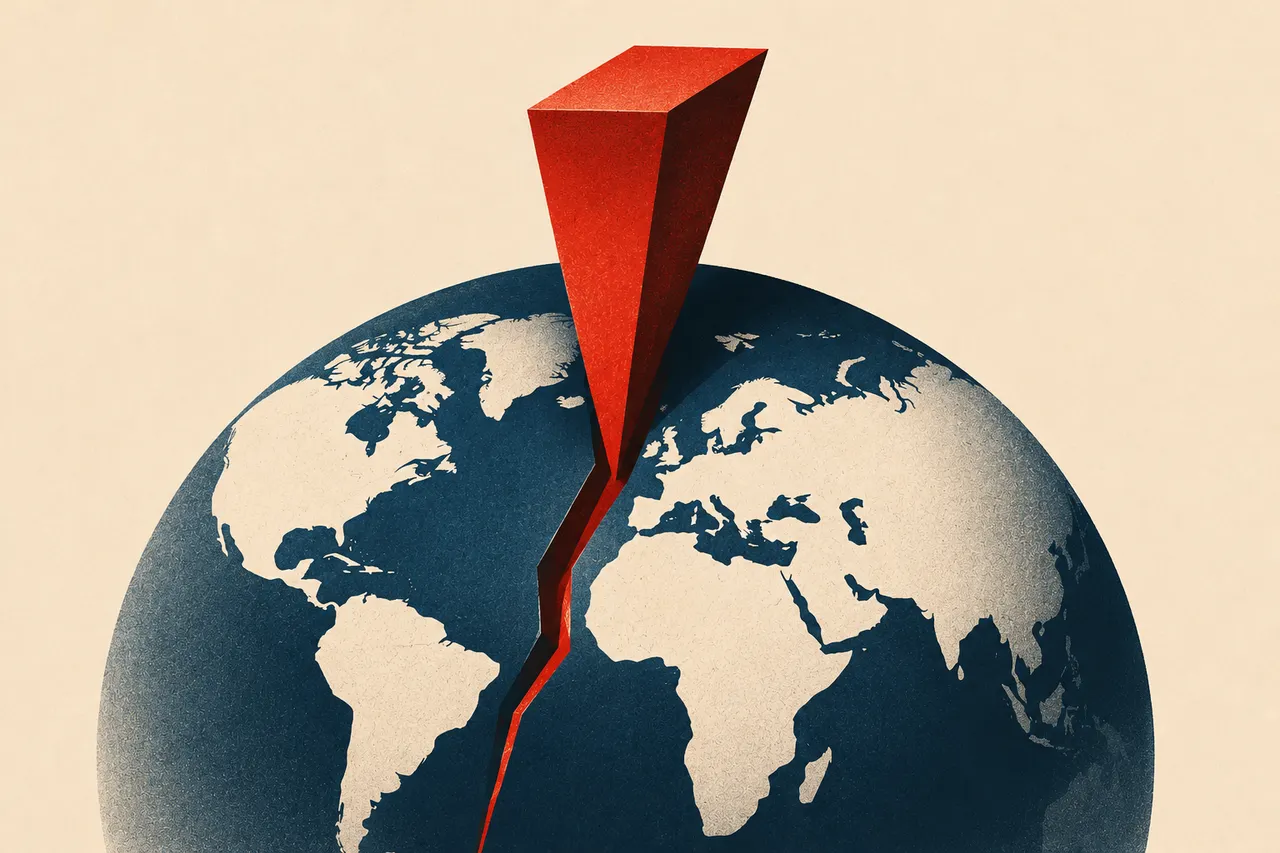
Despite the apparent imbalance of forces, Russia remains unconvinced by NATO’s reputation as the world’s strongest military alliance.
The main goal of Moscow's policy is to undermine unity among EU and NATO countries over support for Ukraine, while linking a settlement of the war to NATO's gradual withdrawal from the Baltic states, Poland and Finland.
The famous dictum of German military theorist Carl von Clausewitz that war is a continuation of politics by other means is at the heart of Russia's hybrid strategy. To understand how a war-battered, technologically lagging and economically frail Russia plans to undermine NATO, the political perspective is far more important than the military one.
In Moscow's eyes, the war in Ukraine is only part of Russia's fight against NATO. Victory on Ukrainian battlefields is only part of Russia's strategic goal. To understand this, one must look back to December 2021, shortly before the full-scale war began in Ukraine, when Russia issued an ultimatum demanding that NATO and the US dismantle the alliance's military infrastructure in member states that joined after 1997, including the Baltic states.
Undermining NATO's presence in Eastern Europe is a central element of Russian policy, and the wave of seemingly unrelated unconventional attacks on Europe must be viewed in this context. Seemingly minor official information operations, such as those surrounding the closure of the Russian–Estonian border at Narva, are causing public alarm, compounded by evidence that Russia is not sending newly produced tanks to the front but placing them in long-term storage near NATO's borders.
Simultaneously, the pressure from irregular migration orchestrated by Russia and Belarus on the borders of Latvia, Poland and Lithuania not only drains these countries' resources but also creates opportunities for rapid escalation. A disturbing example is an incident on October 5 on the border between Belarus and Latvia, where an unidentified armed person threatened a Latvian soldier and attacked border infrastructure the following day. A day later, the incident became part of a broader information operation that raised alarm about the involvement of pro-Russian terrorist organisations. The political sensitivity of this border issue makes it fertile ground for provocations designed to create a political crisis stretching from Riga to Brussels.
Unconventional threats form the basis for political threats
Russia organises unconventional operations across Europe through a network of saboteurs and provocateurs recruited on TikTok and Telegram. For now, European justice systems are powerless against this network. Criminal networks linked to Russian intelligence services operate openly in Germany, Romania, Turkey and elsewhere in Europe. Poland has announced that it has thwarted a Russian sabotage plot on its territory.
The attacks organised by Russia are becoming increasingly dangerous and pose an ever more direct threat to European citizens. Attacks on civil aviation infrastructure in Germany, escalating tensions between Muslims and Christians in France, and cyberattacks across Europe could claim lives. Hybrid attacks weaken Western societies' trust in their governments, and Moscow calculates that growing panic over threats in individual NATO member states would force their governments to adopt a conciliatory approach towards Russia.
The line between political and social pressure is thin. A striking example is the complex threat posed by Russia's instrumentalisation of migration on the Latvian, Lithuanian and Polish borders. By combining humanitarian tragedy with explicit narratives about security threats, Russia retains the ability to inflame sentiment among both liberal and nationalist constituencies.
Most migrants crossing the border seek economic prosperity. At the same time, individuals trained by Russian and Belarusian security services attack border infrastructure and stage provocations, posing a real threat to NATO personnel protecting the border. On NATO's eastern border, Russia currently retains the initiative and can, at an opportune moment, rapidly escalate the situation into bloody clashes like those in Ceuta.
Military threats are part of that spectrum. A “limited” military confrontation with Russia, for example in Narva, the Suwałki corridor or Latgale, is one possibility, although resilience to any possible Russian operation is far higher in this region than elsewhere across Europe. Focusing solely on the military perspective obscures the broader goal. Military exercises and the restocking of operational-level long-term storage depots along the borders with the Baltic states and Finland lay the groundwork not only for potential aggression but also for issuing threats and sowing panic. This is compounded by the threat of Russian drones and the ever-present nuclear threat, Russia's ultimate military argument.
The domino effect: the Ukrainian perspective
Just as war is a continuation of politics, foreign policy is a continuation of domestic politics. The aforementioned range of threats is an inseparable part of Russia's political influence operation: it divides the public and creates concern and uncertainty about the future among citizens, within governments and even across the alliance as a whole. This is essential given that invoking Article 5 requires a unanimous decision by all NATO countries.
Doubt and ignorance are key elements of this strategy. Russia is not seeking NATO's immediate collapse, Ukraine's unconditional capitulation or the incorporation of the Baltic states into Russia. Instead, Russia is actively undermining the alliance's unity while offering a foreign-policy deal on seemingly minor issues. At a time when conflicts in the Middle East have dramatically worsened the economic situation, Russia is offering its resources, especially oil and natural gas, in exchange for concessions to its ostensibly “reasonable” demands.
At the level of strategic communication, the supposedly “fair demand” is NATO's withdrawal from Russia's borders. NATO member states cover about one-sixth of the world's land area. The farther an alliance member is from NATO's eastern flank and the greater its domestic political challenges, the more interested it may be in resolving a growing conflict with Russia. The greater that interest, the easier it becomes to accept a compromise based on the supposed “fairness” of Russia's demands.
Ukraine is a catalyst for discussion in this context. The role of NATO and EU states in mediating in the Russia–Ukraine war allows the Kremlin to link the Ukrainian issue to NATO's supposedly excessive military presence in Eastern Europe. Moscow signals to Western European nations that a settlement of the war in Ukraine will come sooner if they heed Russia's supposedly justified concerns over the deployment of NATO infrastructure and battlegroups in member states that directly border Russia.
In both its official rhetoric and bilateral contacts with Western countries, Russia signals that a formal or informal NATO commitment to reduce the alliance's presence in Finland, the Baltic states and Poland would create a favourable international climate for Russia to accept a compromise settlement of the war with Ukraine.
Divisions and deals: the outlook for 2027
The NATO commander made it clear in Warsaw on October 12 that NATO must be ready to fight today. Yet by the time shooting starts, it may already be too late. Moscow's intention is not to have its demands met immediately, but to sow discord among Western allies by prompting debate over them within NATO and the EU. As incidents in Eastern Europe suggest, even discussions about the role of NATO's Article 4 may cast doubt on the alliance's unity.
“Proximity to war,” “peace at all costs,” “the domestic cost of supporting Ukraine” and “NATO must reduce its presence in Eastern Europe” are narratives seen in election campaigns across NATO and are sure to intensify in next year's elections in France, Italy and elsewhere.
Russia's demand that NATO withdraw its enhanced Forward Presence (eFP) battlegroups from member states on the eastern flank would not, in theory, mean either excluding Eastern European countries from NATO or diminishing their sovereignty. However, continued concessions to the aggressor or curtailment of Ukraine's political rights can quickly become a catalyst for further negotiations on “compromises” with Russia, combined with yet more hybrid warfare. Each such move would intensify discussions about a “policy of appeasement” and a “new geopolitical agreement” of the kind that enabled the Soviet Union to tear apart Poland, the Baltic states and much of Eastern Europe.
While the temptation to sacrifice other people’s land and other people’s lives may be presented as a short term solution elsewhere, history shows that it is never enough to satisfy an aggressor who seeks to redraw borders and reshape Europe’s entire security architecture. This is a long-term challenge in which NATO must marshal all available resources, both on the alliance's eastern border and in Brussels and Paris.
Roberts Rasums is a security analyst at the Northern Europe Policy Centre and an officer in the Latvian National Armed Forces. His work focuses on civil-military relations, hybrid threats, and the implications of emerging tehnologies for deterrence and resilience.


