
World War III? The Baltics have a better idea
The international order needs ambitious reform, regardless of whether future generations describe our era as World War III (or the prelude to it). We must already start building World Peace III with stronger protection for all sovereign nations. It’s the only way this era of aggression will end.
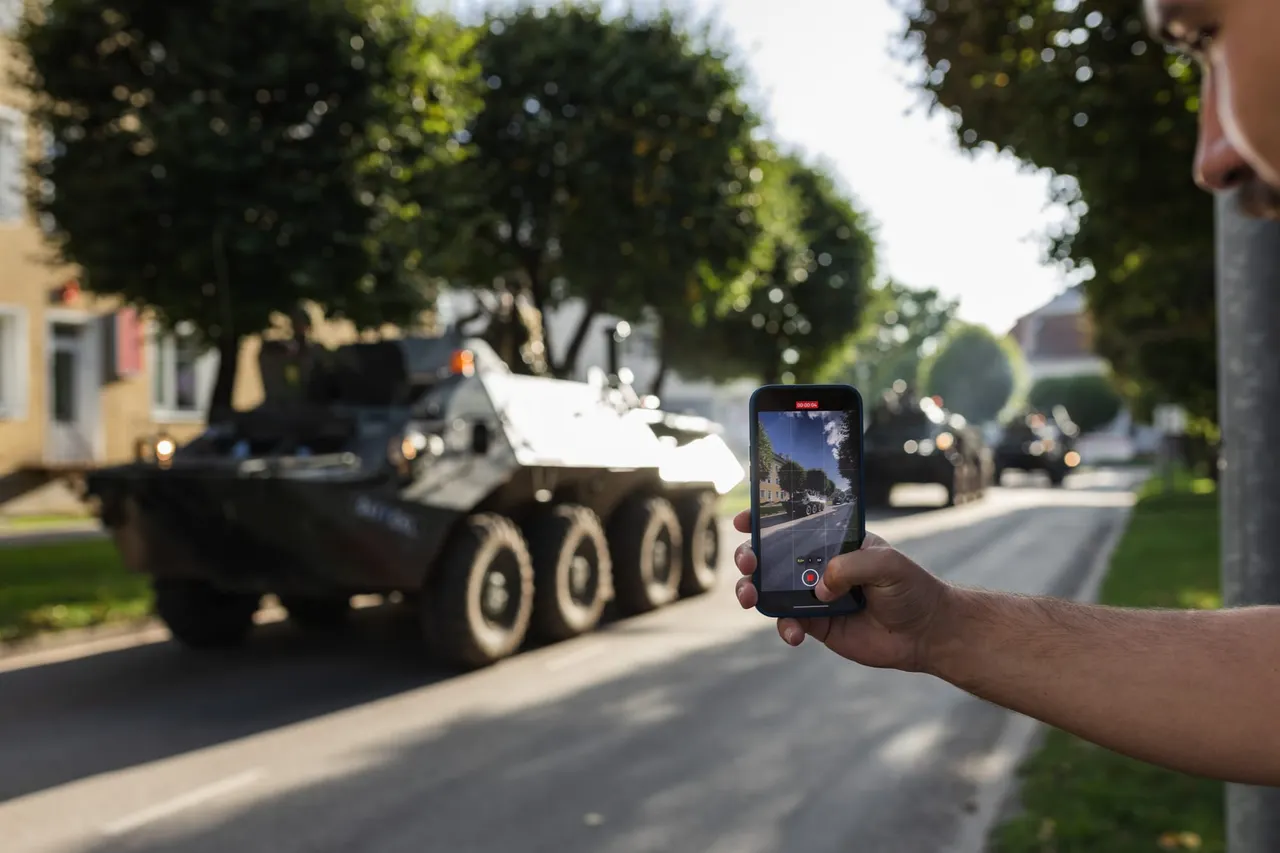
It has become commonplace for world leaders to speculate publicly about the outbreak of a third world war, notes the FT’s chief foreign affairs columnist Gideon Rachman in his latest column.
These concerns are well founded, but also exploited by pro-Russia commentators who argue that a world war can be averted by further appeasing Russian aggression. By that inverse logic, it’s somehow countries like the Baltics that want a world war by standing up for the rules-based order.
A spoiler alert here for those who haven’t yet read a history book.
Rewarding aggression does not avert a world war. It fuels it. An aggressor is never satisfied after being fed just one more slice of someone else’s territory. It only becomes stronger, hungrier, and more willing to break more rules.
But how we do we know when it’s reached the point of a world war?
“Although world leaders have got used to chucking around the phrase ‘third world war’, they rarely stop to define the term,” points out Rachman.
He offers two defining characteristics: a world war would involve the world’s most powerful nations in direct conflict and it would be a conflict that spans multiple continents.
Based on that definition, the warning lights on the dashboard of the international system have been flashing red for several years now, as even North Korean soldiers are fighting in Europe as part of Russia’s war of aggression against Ukraine.
Whether a conflict happens to cross tectonic plates deep under the Earth’s surface is somewhat arbitrary though.
We should consider a third feature of both world wars that may matter far more for our future: both gave rise to ambitious attempts to rebuild the international order.
This is the one and only feature of a world war that we should all hope to see emerging, regardless of whether there’s a third world war.
There have been two major attempts to build a rules-based international order based on a vision of peacefully cooperating sovereign states. Each began during a world war. The idea of peaceful rules-based cooperation didn’t just spring spontaneously from the ruins afterwards.
The post-WWII order was designed before the war was won.
— Ambassador Jonatan Vseviov (@vseviov) October 1, 2026
The Atlantic Charter, Bretton Woods, Dumbarton Oaks — all were about shaping the peace while still fighting the war.
If we wait for the war to end before designing the peace, we may win the war only to lose the peace.…
As noted by Jonatan Vseviov, Secretary General of the Estonian Ministry of Foreign Affairs, the foundations for the United Nations and the post-war international legal order were planned by the allies during the darkest years of the Second World War when nearly all of Europe was under the control of the totalitarian aggressors.
If Twitter existed back then, pro-Nazi and pro-Soviet commentators trying to sound reasonable would no doubt ridicule these plans for a United Nations as delusional idealism and instead argue that the next step on the path to peace could only be British surrender.
Similarly, during the First World War, detailed planning for the post-war international order began in Britain in 1914, just weeks after the war’s outbreak when the Cambridge scholar Goldsworthy Lowes Dickinson began sketching out a plan for a new international organisation.
That became the League of Nations, an ambitious first attempt at world peace implemented in the aftermath of the First World War. It was ambitious for its time, but also far too structurally weak and limited in global scale to prevent the aggression that tore it apart.
The world could not simply revert to the League of Nations after the world war that it had failed to prevent when Hitler and Stalin agreed their Nazi-Soviet Pact to divide up Europe.
The United Nations, in its current structure, has also failed to prevent aggression and uphold its values, as set out in its own charter. The post-WW2 consensus includes respect for territorial integrity as a fundamental rule.
That order suffered a devastating blow all the way back in 2014, when Russia, a veto-wielding permanent member of the UN Security Council no less, invaded Ukraine and illegally annexed Crimea, openly defying one of the fundamental principles of the postwar settlement, and using its privileged position within the international system to evade accountability.
The widening aggression and deteriorating international climate since then underscores the fact that there is no going back to the post-WW2 international order that failed to prevent this.
Whether it takes months, years, or centuries to end this era of aggression, depending on our collective will, it can only truly end eventually with a third attempt to build a rules-based order of sovereign states. Anything else, including a Russian victory in its war of aggression against Ukraine, will only prolong and worsen the era of aggression as it expands wider.
This doesn’t mean the UN needs to be scrapped or change its name, but it needs urgent reform to address its weaknesses and better uphold its own values, delivering an upgrade to our international system as ambitious as when the UN was built as an upgraded League of Nations, while keeping the same stated values and even much of its assets.
The Baltic countries have always been among the most staunch defenders of a rules-based world of peacefully co-operating sovereign states, hence why pro-war and pro-Russia commentators direct so much rage at them, but they also understand all too well that our rules-based world has always had serious flaws.
The Baltic countries were early members of the League of Nations, yet the only members of the League of Nations not subsequently allowed to join the United Nations as founding members - due to their occupation as a consequence of the Nazi-Soviet Pact that was only annulled half a century later after a long struggle by the Baltics to be included again in the international order.
That FT article uses Estonian soldiers as its cover image, although as Marko Mihkelson points out, this is the last place anyone would be sleepwalking.
The @FT uses Estonian soldiers to illustrate its essay. If anyone is sleepwalking, it certainly isn’t us here in Estonia. https://t.co/NW0nmqVHih
— Marko Mihkelson 🇪🇪🇺🇦🇪🇺 (@markomihkelson) October 18, 2026
The Baltics still want a better world order.
Vseviov, like many across the Baltics, have been hammering the point that we must already now design the peace that ends this era of aggression.
Estonian Foreign Minister Margus Tsahkna wrote an op-ed for the Guardian in 2023, first laying out Estonia’s vision for an upgraded international order. His argument now deserves even more attention.
 Margus Tsahkna
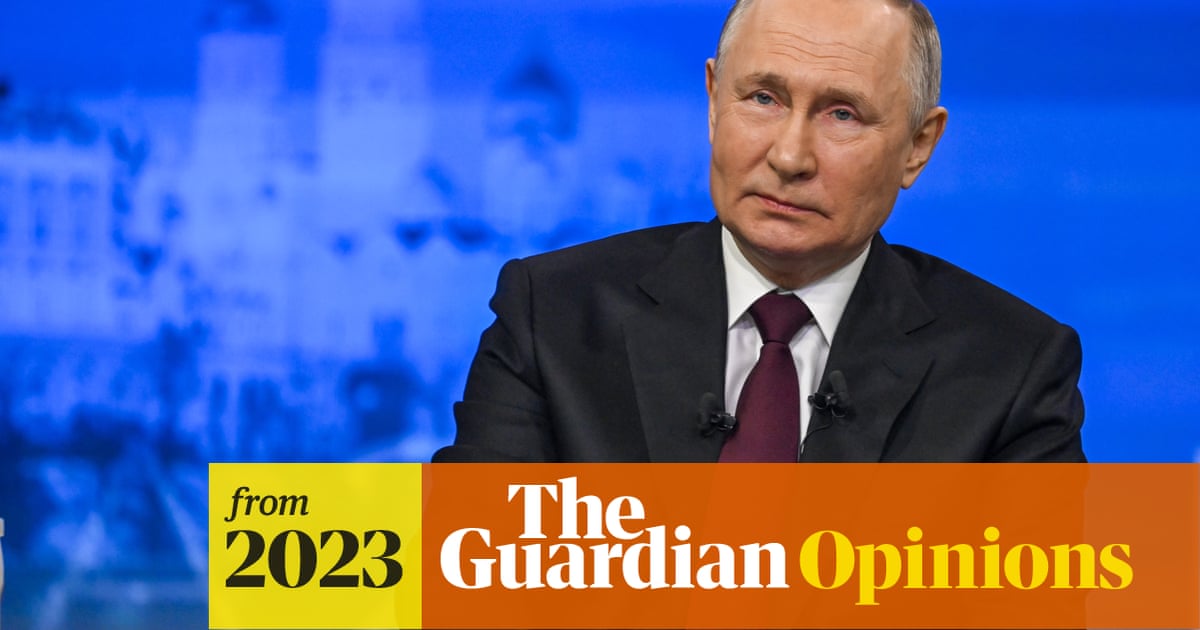
Tsahkna explained that “we cannot merely hope to save the existing rules-based international system from the crises that this system led us to, nor expect everyone to be passionate about something they do not feel is working for them. If it can fail once, it will fail again. It needs fundamental change.”
What’s notable is that this isn’t just about regional security for Ukraine or for the Baltics. It’s an ambitious vision of an upgraded international order that gives a bigger say to smaller nations and civic societies everywhere because this is in the best interests of all countries.
Tsahkna explains that the conversations that took place in the first and second world wars to build a better rules-based world should never have been considered finished. It’s a continuous task.
“We must not wait for a repeat of the devastation that they endured,” he adds. “We can and must continue the momentum that they started and inspire a new global conversation on making the world fit for freedom.”
Tsahkna reiterated the argument in his annual foreign policy address to the Estonian Parliament in 2024, in which he emphasised reform of the United Nations as central to Estonia’s goal to strengthen the rules-based international order, including with fundamental reforms to to the Security Council to ensure less powers for aggressors and more representation for small states.
Crucially, there must be a special tribunal to prosecute the crime of aggression.
That same year, Estonian, Latvian, and Lithuanian diplomats issued a joint statement at the United Nations General Assembly arguing for urgent security council reform in order to uphold respect for its own rules, such as restraint on vetoes, and a stronger role for the General Assembly.
All three Baltic presidents have continued to push this further, both in their own annual General Assembly speeches, but also as a joint team in behind-the-scenes discussions with the UN Secretary General and leaders of other nations.
All this reform is necessary regardless of whether future generations come to regard our era as the Third World War, or the prelude to it. This is necessary even if all conflict suddenly paused tomorrow. There would still be no going back to the international order exactly as it was.
We’ve been looking at history the wrong way around.
We divide history into two world wars as if peaceful coexistence is the natural state of affairs in our world the rest of the time.
In reality, humanity has had to endure centuries of warring empires. The First World War was arguably the culmination of the age of empires. The Second World War was an attempt to drag us back to that age of empires, after Hitler and Stalin agreed their pact to divide Europe into spheres of influence.
Colonial history and world war history are usually separate chapters in our history books, or more often separate books entirely, but if more people understood that world wars are imperial wars too, then it might also help build the global consensus needed to properly defend a rules-based order that serves all sovereign nations.
History wasn’t just interrupted by two World Wars. It was also interrupted by two attempts at World Peace, the ambitious efforts to build a rules-based world of sovereign nations as an alternative to centuries of imperial conquest.
The idea of ‘world peace’ is mostly associated with hippies. It’s also long been co-opted by pro-Kremlin groups, like the World Peace Council and its successors who only ever oppose Western military intervention while justifying wars elsewhere. In reality, the closest thing to world peace is a rules-based world of sovereign nations. As sure as the Earth is round, our two limited experiments in a rules-based world have already proven to help deliver the greatest periods of peace and prosperity in world history. The only problem is that they’ve been too limited and too easily abused by aggressors. It’s time now for ‘world peace’ to be reclaimed by those who start rebuilding the rules-based world in its third major iteration. This won’t involve singing kumbaya or trying to hug invading soldiers committing atrocities. And it won’t rely on bullshit political theories like each country having a McDonalds or whatever ‘realists’ come up with next to justify their favourite “great powers” tearing the world apart. World Peace depends on an international system that helps ensure aggression is never rewarded and those who would try it are not just defeated militarily, but brought to justice too.
We don’t need another world war to recognise that the system already needs another fundamental upgrade, and we also must not wait to get working on it.
So instead of obsessing too much over a hypothetical World War Three, or worse, rewarding aggression in the hope of averting it and turning it into a self-fulfilling prophecy, we should already be preparing for World Peace Three.


