Latvian voters deliver unprecedented landslide
Prime Minister Andris Kulbergs says Ukraine must win and Europe must get serious about security.
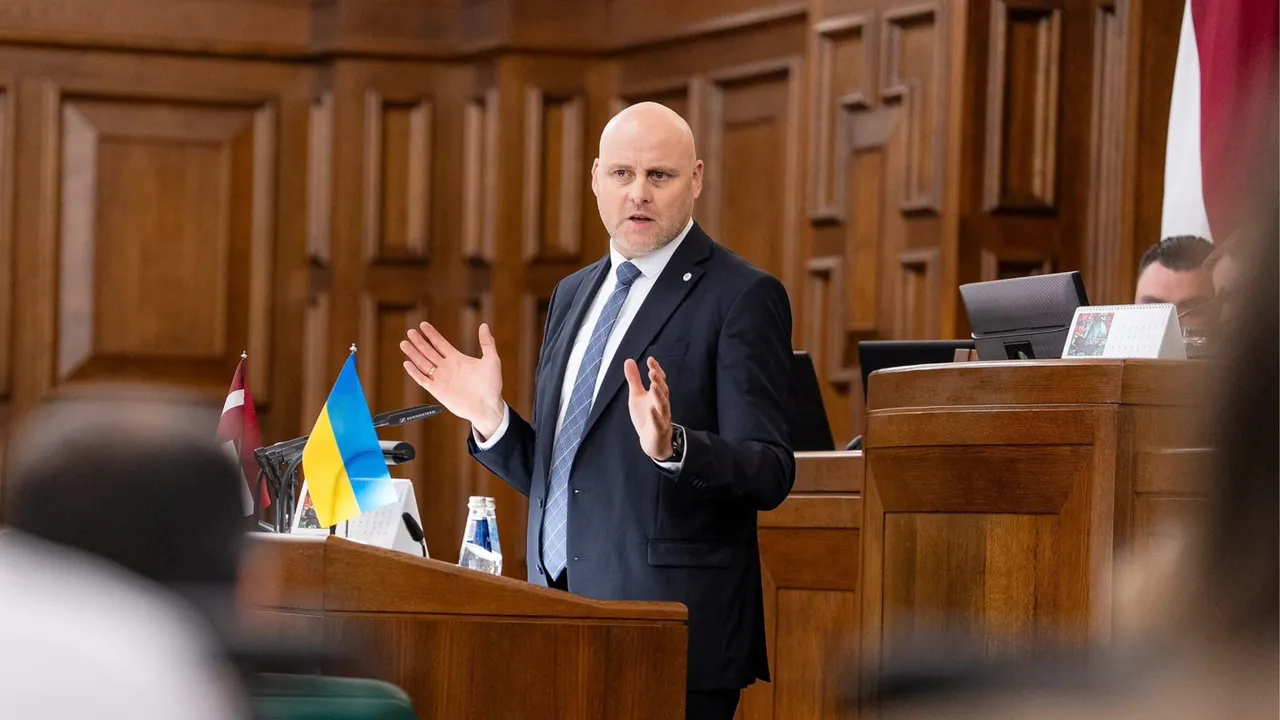
Put two Latvians in a room together and they’ll form three different political parties, according to an old joke.
Latvian politics has long been fragmented (or ‘vibrant’ as we’d prefer to say). The winning party has often received just 15-20% of the vote share.
That makes Latvia’s election results this weekend particularly remarkable.
Prime Minister Andris Kulbergs’ landslide-winning United List is staunchly pro-defence, pro-Ukraine, pro-Europe, and pro-NATO with firm warnings to the rest of the continent about why Ukraine must win, not merely survive. And the irony is that it’s the culmination of a chain of events that begun with Russia’s attempt to weaken support for Ukraine in Latvia.
Drones enter Latvia, diverted by Russian electronic warfare, aimed at undermining support for Ukraine > Government resigns after criticism of response > New Latvian PM vows stronger defence, Ukrainian victory > Voters deliver him biggest ever win, increasing support for Ukraine.
— Baltic Takes (formerly badbaltictakes) (@Baltic_Takes) October 4, 2026
Kulbergs is outspoken on the need for Europe to step up and address the threat from Russia. At the recent Riga Conference focused on European security, he emphasised that Europe is on borrowed time.
Latvian PM Andris Kulbergs: "Just take one train ride to Ukraine and you come back and you understand we are on borrowed time. If we don't help and support Ukraine, we are on borrowed time and we need to use that time wisely." pic.twitter.com/6Diyp1stbX
— Scott Robertson (@sarobertson_) September 14, 2026
It’s because Russia is losing its war against Ukraine that it is increasingly targeting European countries in an attempt to undermine support for Ukraine, says Kulbergs. All European countries must remain united and double down support instead, he adds.
Kulbergs backs maintaining at least 5% of GDP defence spending and also increased cooperation with Ukraine, particularly on drone tech, to ensure it is spent wisely.
Putin targets Latvia through hybrid warfare "because he is losing in Ukraine," Latvian PM @AndrisKulbergs tells #EuropeToday.
— euronews (@euronews) July 23, 2026
Kulbergs also said Belarusian migrants trying to cross into Latvia are part of Russia's destabilisation campaign: "It's a war threat."
Full interview: pic.twitter.com/hnp7lMGaUE
Just a few weeks ago, United List was polling at only around 14% and, even on the eve of the election, the winning party was still uncertain.
They are now suddenly a dominant force nationally, with the largest number of seats in Latvian parliamentary history - 42 of 100 in Latvia’s Saeima.
 Mike Collier
Out of 42 districts across Latvia, United List came top in 36, while second place Latvia First came top in just 6. The other parties that crossed the 5% threshold to get seats are Sovereign Power / New Latvians, National Alliance, Progressives, and New Unity.
Latvia First were perceived by many Latvian voters as too soft on Russia, favouring a restoration of trade, although they are far from openly pro-Russian and do condemn Russia’s invasion.
Meanwhile, the four clearly pro-Ukraine parties now hold more than two thirds of Saeima seats, a modest increase, although mostly now concentrated in United list.
Here below is how the vote was split, as shown by public broadcaster LSM, which also does good coverage in English.
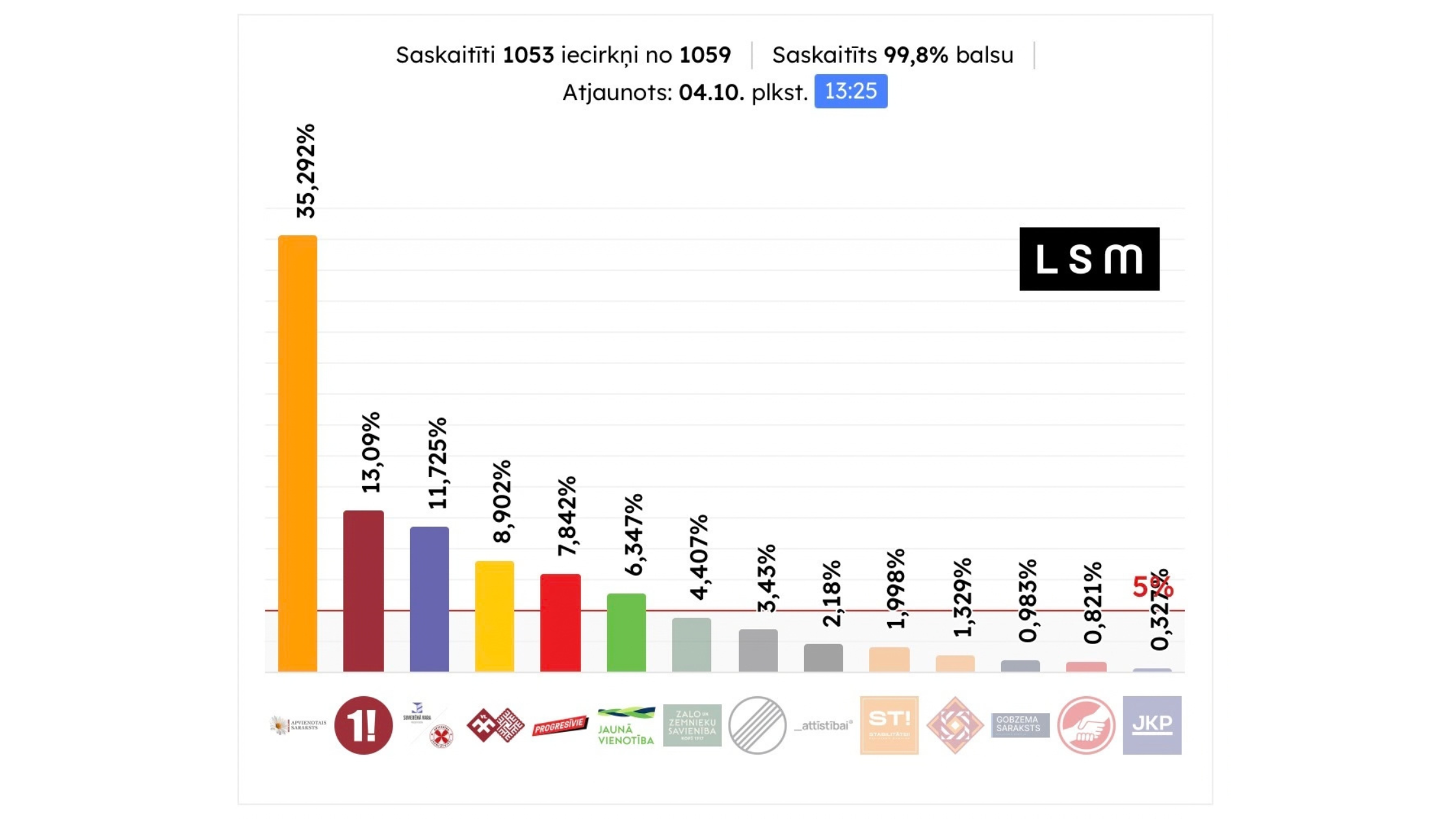
It doesn’t quite put an end to the old joke though. United List is not technically a single political party, but itself an alliance of parties and independents with regional bases, now elevated considerably by the personal popularity of Kulbergs.
An article in Politico yesterday described Kulbergs as a populist, which is a bit of a stretch as a general description without some qualification. His alliance primarily defines itself as centrist and is more pragmatic than ideological, although Kulbergs uses firm rhetoric railing against bureaucracy and state management, communicated directly to voters through savvy use of video on social media.
He was able to enter this election as both the incumbent and outsider, having only entered the Saeima at the previous election four years ago and only assembling a coalition to become Prime Minister four months ago.
While quite seismic, a plausible interpretation of the results is not that there has been any major shift in attitudes across Latvia, but simply that voters strong on Latvian defence have coalesced around a leader with firm messaging.
The rest of Europe will now get to hear that a lot more too, and Kulbergs is not shy about saying why the Baltics were right about Russia.
Latvia's PM Kulbergs: Some call the Baltics chihuahuas.
— Tymofiy Mylovanov (@Mylovanov) September 14, 2026
But we warned everyone that Russia would attack. We were occupied for 50 years and know what the bear eats. A bully shows muscle, and only force deters it. 1/ pic.twitter.com/3DiL2yVfZr
Latvia’s neighbours are generally happy with the results too.
Good news from our neighbours: Pro-European forces that strongly support Ukraine won a clear victory in Latvia’s elections. Russia’s attempts to interfere and exert influence have once again failed. https://t.co/bWwTQ87pem
— Marko Mihkelson 🇪🇪🇺🇦🇪🇺 (@markomihkelson) October 4, 2026


