
Estonia to seal its border with Russia after thwarting GRU attack and detaining eight suspects
Russia's hostile actions have a price, says Estonian Foreign Minister Margus Tsahkna, as pressure now grows on all EU countries to stop issuing visas to Russian citizens.
In the early hours of Saturday morning, eight suspected saboteurs attempted to break into drone-maker Threod Systems near Tallinn. Estonia’s Prosecutor General Astrid Asi says their intent was to start a fire and cause an explosion.
The attack was thwarted by the company’s own heightened security measures, as well as Estonian and Latvian security services, KAPO and VDD, working in coordination.
Can we just take a moment to praise the security at Threod Systems who were able to thwart eight saboteurs at 3am on a Saturday morning.
— Baltic Takes (@Baltic_Takes) November 16, 2026
Russia put a huge amount of effort into preparing this one attack and it totally backfired.
No injuries and no significant damage. All eight… pic.twitter.com/4AGAeMBWpU
VDD says it searched nine sites in Latvia linked to the suspects, all of whom are residents of Latvia and a combination of citizens and non-citizens. They found explosive devices and ammunition, as well as a large amount of mobile phones and data storage devices.
KAPO says the failed attack was coordinated by Russia’s military intelligence agency, the GRU, as part of its Europe-wide campaign of hybrid warfare attempting to undermine support for Ukraine. Estonian Prime Minister Kristen Michal says Estonians will not be intimidated.
On the night of 14 November, GRU-ordered sabotage attempt targeted Estonian defence company Threod Systems. Extensive damage was averted thanks to heightened security measures and a swift reaction by law enforcement. The attackers have been detained. This is part of Russia’s…
— Kristen Michal (@KristenMichalPM) November 15, 2026
As reported by Holger Roonemaa at Baltic Flank (who you should definitely be following in times like this), a conviction carries a prison sentence of up to 15 years for the offences, which are being invested as “committed by an employee of a foreign intelligence or security service, or by a person acting in the interests or on its behalf, against the security of the Republic of Estonia.”
Another great Estonian journalist, Harry Tuul, sums up the defiant mood in Estonia and points out that Russia’s security services are not just limited in their ability to target Estonia but, more significantly, just don’t understand the dynamics of Estonian society and its ability to increase resilience in the face of attempts to sow fear and division.
Rünnakud või rünnakukatsed Eesti vastu ei tekita mitte hirmu ja paanikat, vaid otsustavust ja ühtsust. Enesekindlat soovi koht kätte näidata. Ja mitte kitsalt riigisektoris, vaid laiemalt ühiskonnas. 4/6
— Harry Tuul (@HarryTuul) November 16, 2026
Consequences for Russia
Estonia’s response has been swift, including with its announcement that all border crossings with Russia will be closed indefinitely on 1 December, limiting its ability to orchestrate sabotage and other forms of subversion, as well as circumvent sanctions.
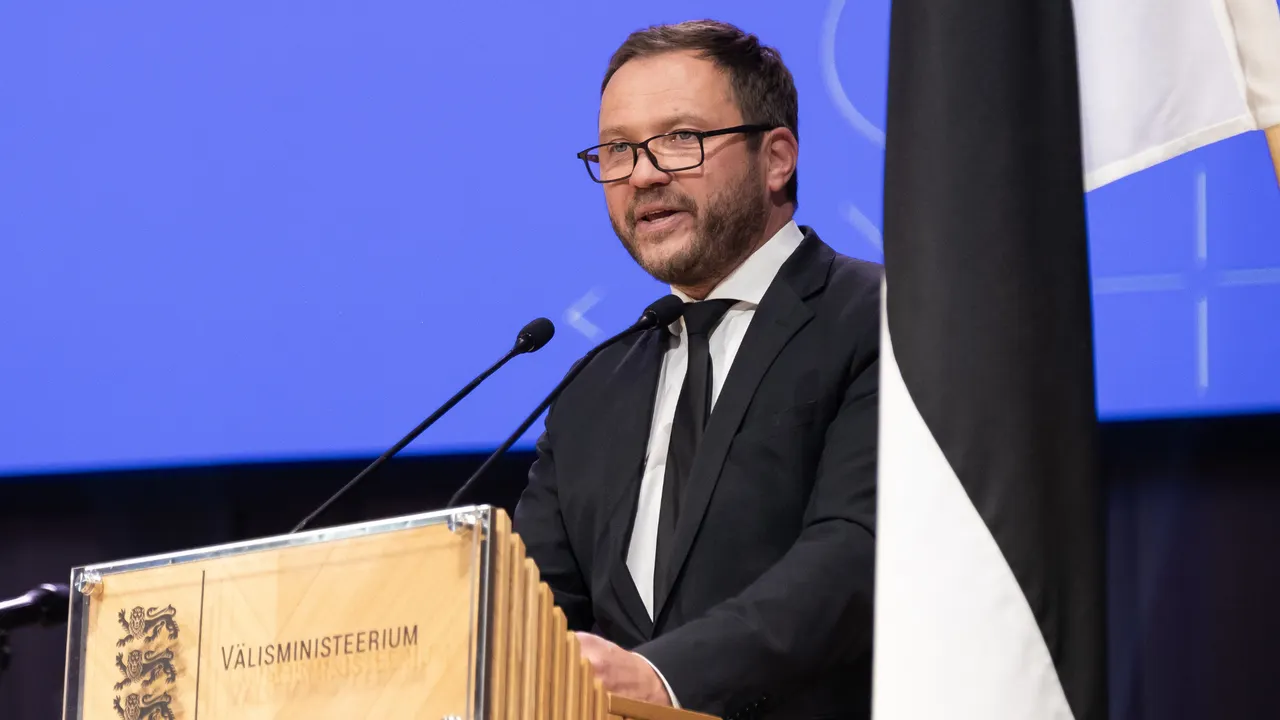
"Any attempt to threaten Estonia's security, sow fear, or act hostilely against us will be met with a decisive response," said Estonian Foreign Minister Margus Tsahkna. "By closing the border crossings, we are sending a clear message to the Kremlin: Russia's hostile actions come at a cost. The more aggressively Russia behaves, the narrower its room for manoeuvre becomes."
Consequences for Russian terrorist actions, imagine that. If only the rest of Europe did the same. Until they do, these attacks will accelerate. https://t.co/k8PXb1ZbNM
— Garry Kasparov (@Kasparov63) November 15, 2026
Russia has had a strong interest in keeping the border open, even with its heavy restrictions over recent years. For Estonia, it is the most significant unilateral move it hadn’t yet taken. Closing Russia’s ‘cultural centres’, as Germany did following Russia’s failed attack at Leipzig, is not an option because Estonia has long since applied measures at that level.
Estonia won’t be the first EU country to seal the Eastern border though. The move brings Estonia into alignment with Finland, which closed all land border crossings with Russia in 2023 following Russia’s weaponisation of human trafficking to the Finnish border.
While the plans are due to be formalised this week, Estonian Prime Minister Michal has indicated he favours making the border closure permanent.
There will now be considerable pressure for Europe-wide action in line with Finland and Estonia, which should include visa restrictions on all Russian citizens. The EU still hands out more than half a million visas each year to Russian citizens, the vast majority issued by just Spain, France, and Italy. In fact, the European Commission recently revealed that this figure is rising, while the refusal rate is just around 6%.
Tsahkna says he has already been in contact with Finnish, Latvian, and Lithuanian counterparts about the border closure, and also informed EU colleagues. He will be in Brussels today discussing how to add further pressure on Russia at a meeting of European Union foreign ministers.
"As long as Russia continues its war of aggression against Ukraine and threatens European security, we must increase pressure on all fronts,” he adds. “This means tougher sanctions, a stricter visa policy, and additional steps that limit Russia's ability to implement its goals."
The entire EU should follow in Estonia's footsteps and close the border with Russia. There is no other way to guarantee security. https://t.co/5oSVPioALH
— Kate from Kharkiv (@BohuslavskaKate) November 15, 2026
Pan-European solidarity
“Hopefully, our other neighbours will follow Finland and Estonia’s lead,” tweeted Marko Mihkelson, Chairman of the Estonian Parliament’s Foreign Affairs Committee, reflecting cross-party sentiment.
Estonia 🇪🇪 is preparing to close its border with Russia 🇷🇺 as of 1 December. The immediate trigger was yet another attempted attack on an Estonian defence industry company, carried out overnight from Friday into Saturday and reportedly orchestrated by Russia’s military…
— Marko Mihkelson 🇪🇪🇺🇦🇪🇺 (@markomihkelson) November 15, 2026
Estonia also received warm messages of solidarity from across Europe, after news broke of the failed attack.
“Russia turns to sabotage when it fails on the battlefield,” posted Lithuanian Foreign minister Kęstutis Budrys. “Unable to break Ukraine’s will, the Kremlin seeks to intimidate and destabilise European societies instead.”
Budrys, a former senior intelligence officer, says “this is state-sponsored terrorism” and so “Europe should seriously consider listing the GRU and other Russian intelligence and security structures involved in sabotage operations as terrorist organisations.”
#Lithuania commends #Estonia’s security and law enforcement services for swiftly thwarting the GRU-orchestrated sabotage attempt against Threod Systems on the night of 14 November.
— Kęstutis Budrys (@BudrysKestutis) November 15, 2026
Russia is no longer hiding behind proxies. The fingerprints lead directly to the GRU.
When a… https://t.co/zfZWajN9R7
“Our response must be clear: stronger support for Ukraine, greater pressure on Moscow, and real consequences for those directing and carrying out these attacks,” said Budrys. “The lesson is simple. Every Russian act of sabotage in Europe must carry a higher cost for Russia.”
Ukrainian Foreign Minister Andrii Sybiha said that “Estonia has shown that Russian sabotage can and should have consequences beyond diplomatic condemnation. This approach deserves wider support across Europe.”
Ukraine stands in full solidarity with Estonia following the attempted arson attack against Estonian defence company Threod Systems.
— Andrii Sybiha 🇺🇦 (@andrii_sybiha) November 15, 2026
I fully share your assessment, dear @Tsahkna, and strongly condemn this act of sabotage.
By targeting a European defence company, Russia is… https://t.co/JzMgoAQ6QD
Building European resilience
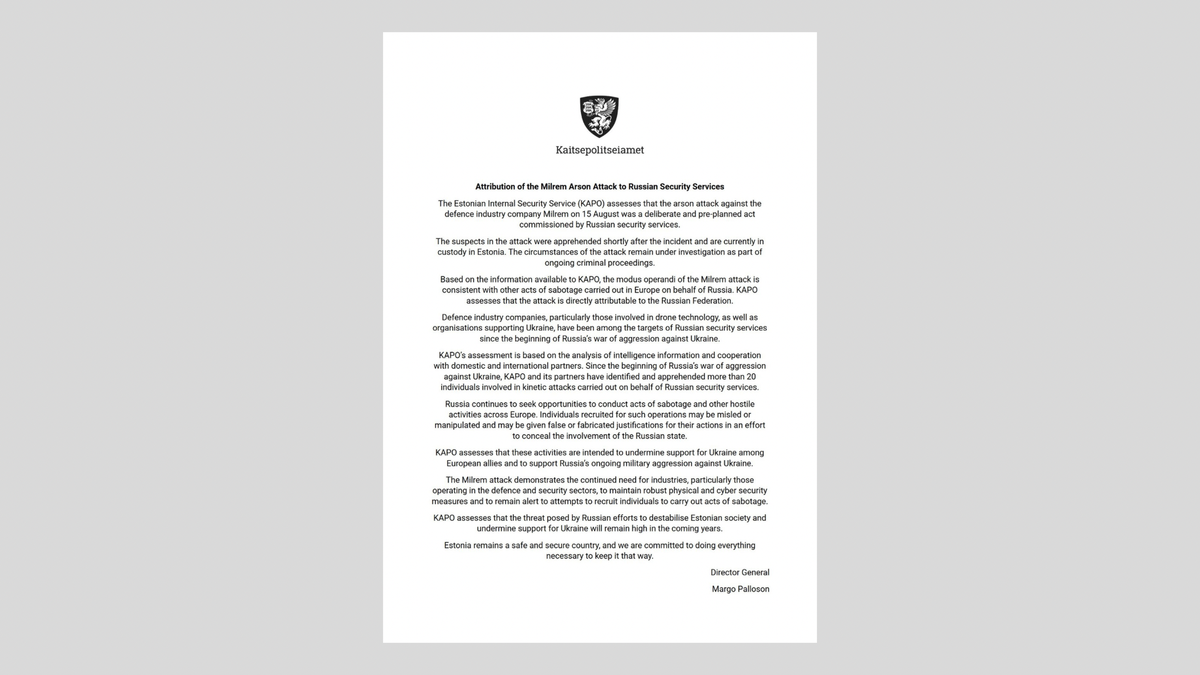
In its last annual review, KAPO warned that Russia is waging a campaign of hybrid warfare across all of Europe, involving sabotage, cyberattacks and other covert operations, all primarily intended to undermine support for Ukraine.
Estonia gets a disproportionately large amount of attention for being the target of espionage, but only because of its effective and transparent counter-espionage, not because it is the subject of more attacks. Sweden’s Defence Research Agency had a comprehensive 2022 study explaining this and criticising the wider European response. We wrote about it on Baltic Takes after the previous GRU-linked sabotage attempt in Estonia.
 Baltic Takes Editor
It’s important for Europe to understand that it is not just countries that border Russia that face this threat, as Leipzig made clear.
All EU countries must build resilience and this extends across all of society. It was Threod Systems’ own heightened security measures that helped prevent a far more serious and possibly tragic outcome, demonstrating that Russia is not all-powerful and can be beaten in its shadow war against the West, as well as on the battlefield, with everyone doing their part.
That would mean more news stories about thwarted attacks, which is much better than more news stories about destruction and disruption resulting from unknown causes.
What’s also clear is that appeasing Russia would not end its campaign of hostile actions. As KAPO explained, Russia has developed networks and operational infrastructure to facilitate attacks across Europe and there is no indication that Russia intends to dismantle this when Russia’s war against Ukraine ends.
If Russia is rewarded for its aggression, then it will be emboldened to attack Europe more, hence why increasing support for Ukraine and its armed forces is the right response, alongside limiting travel for Russian citizens into the EU, both through border closures and visa restrictions.
Someone told me you can just tweet ‘Stop giving visas to Russian citizens’ and get like 2 thousand likes.
— Baltic Takes (@Baltic_Takes) November 15, 2026
While our own tweet here may be highly unscientific polling, European citizens certainly do expect much firmer action in defence of their security.
Limiting travel for Russian citizens severely limits the pool of people able to carry out such attacks, and then we can focus on ensuring more of our own people understand that GRU recruitment is a very bad career move.
“We advise against even considering such job offers from Russia,” KAPO posted. The eight suspects surely wish they had listened.


