
Ukraine stopped asking permission. Europe should too
Ukraine did not need German missiles or American satellites to strike a major blow against Russia. It innovated, and did what Silicon Valley preaches: it stopped asking permission.
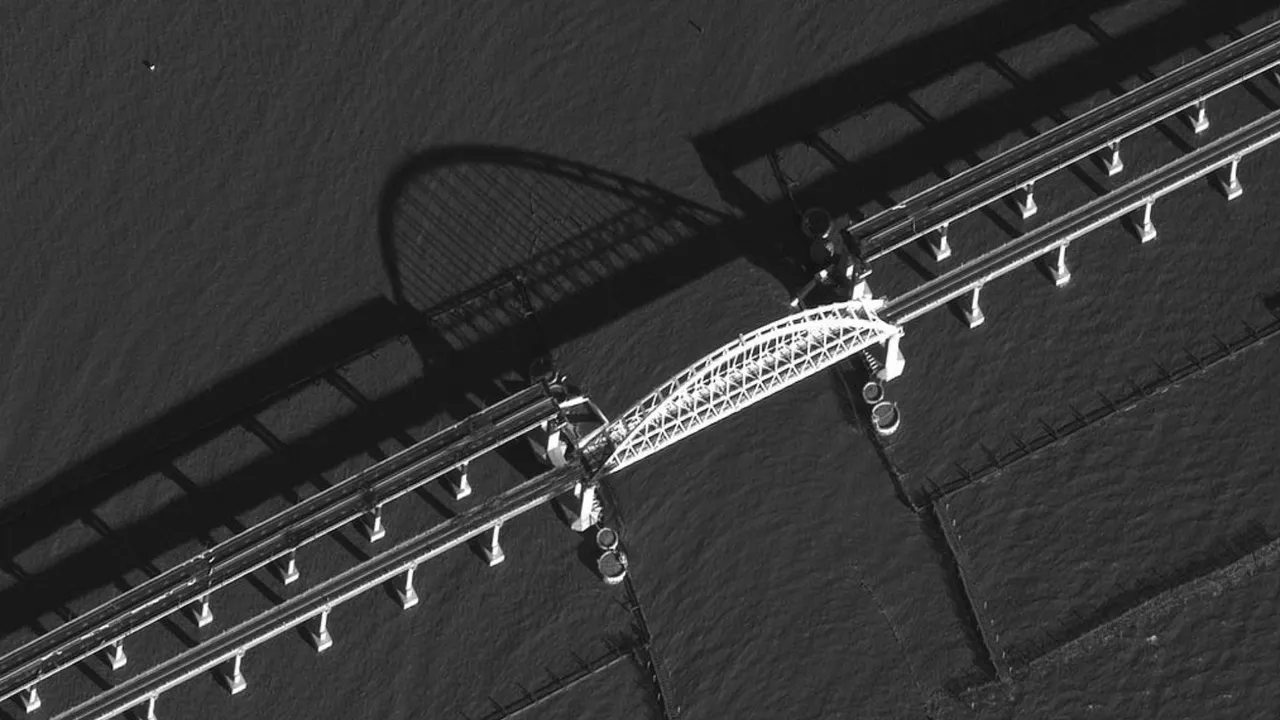
In May 2023 Ukraine asked Germany for Taurus cruise missiles. Olaf Scholz, then chancellor, refused, and in February 2024 he explained why: the missile could be aimed properly only with German soldiers involved in the targeting, and that risked drawing Germany into the war. Four days later Russia published an intercepted call in which senior German air force officers discussed, hypothetically, whether Taurus could bring down the bridge to Crimea. When Friedrich Merz (who had argued for sending the missiles while in opposition) became chancellor, the answer stayed no. In March he said there was no longer any point, since Ukraine’s own long-range weapons were far more effective than the few Taurus that Germany could supply.
On Tuesday Ukraine proved him right, if not in the way Berlin intended. Early on 17 November a span of the Kerch road bridge fell into the sea. Zelenskyy said the operation had run for weeks, in seven stages. Of the eleven types of drone and missile he named, the Flamingo, Neptune and Palianytsia are Ukrainian; the Ruta is made by the Dutch firm Destinus, which says seven of its missiles hit the bridge. Last month Denmark put a state guarantee of about $113 million behind Fire Point, the Flamingo’s Ukrainian maker. Overnight into Thursday Ukraine struck the bridge again, and the trains stopped.
Meanwhile Starshield, the military Starlink that Washington provides, has been slowed on and off since October. So the guidance for the missiles was home-made too. Zelenskyy said the communications uplink “worked flawlessly until the very last seconds”, and an officer involved told The Times that drones had relayed video to the missiles: “We showed we can conduct such operations without Starlink.” Europe likes to say it is training Ukraine’s soldiers. I suspect that by now the training runs the other way.
Over at NATO headquarters on the same Tuesday that the road bridge fell, Elbridge Colby, the Pentagon’s policy chief, told Ukraine’s backers that deep strikes into Russia “have not been effective in driving an end to the war”. Strikes on targets such as Wildberries, an online retailer, had “probably hardened the Russian public’s resolve and the Kremlin’s own willingness to escalate”, he said. He then left early, The Telegraph reported, without hearing Ukraine’s classified briefing on the strikes.
Let’s take his two claims separately, the public first. In February the independent pollster Levada found a record 67 per cent of Russians in favour of peace talks and only 24 per cent for fighting on. Yet 72 per cent said they support the army, and Levada’s director says Russians want the war to end on Russia’s terms. If the strikes are hardening Russian opinion, the polls have yet to show it.
The Kremlin is different: it is far from clear there is any wish for peace to harden. On Saturday, after talks with the real-estate developer Steve Witkoff and Trump’s son-in-law Jared Kushner (fresh from meeting Putin in Moscow), Emmanuel Macron wrote: “Vladimir Putin does not want to negotiate.” If so, what may change his mind is the cost of carrying on. Reuters, citing industry sources, reported this month that Ukrainian strikes had disrupted about 30 per cent of Russia’s refining capacity. Hitting an invader’s fuel and supply lines, not only his front line, is an old military tactic. It is what deep strikes are for.
Asked about Colby’s remarks, Germany’s defence minister, Boris Pistorius, said criticising such strikes was “quite a stupid thing”, and that the strikes deserving criticism were Russia’s, “every night and every day on … energy, water, and heating infrastructure in Ukraine”. Germany has traditionally taken Washington’s line as its own. This time it did not.
Two weeks ago, writing here about Ukraine’s dependence on Elon Musk’s satellites, I said Europe has never been short of engineers, only of the capital to invest and the will to pay a premium for something European. Ukraine has now shown what that looks like, with a Dutch missile and Danish backing but above all with its own engineers. The message of the Kerch Bridge attack, as I read it, was not only for Moscow and Washington but for the rest of Europe too: get over your arrogance. Ukraine has stopped asking permission. If Europe wants a say in how this war ends, and in the security order after it, it will have to stop asking as well.
Toomas Hendrik Ilves was President of Estonia from 2006 to 2016. As Foreign Minister he led Estonia into the EU and NATO. Before that, he was Ambassador to the US. He co-hosts The Continental Rift, a weekly video podcast on European geopolitics, with the American-Estonian comedian Andy Valvur.
Editor’s note
President Toomas Hendrik Ilves and Andy Valvur are great friends of Baltic Takes and we highly recommend the Continental Rift. So check out their latest show on YouTube, Spotify, Apple, or wherever you get your podcasts. Make sure you also subscribe and also follow the Continental Rift on Twitter/X, Instagram, and Threads. Latest episode below.

