
Who speaks for Europe? Ask the Kremlin
Kaja Kallas and António Costa already hold the jobs the European treaties created for this moment. In Dublin, Europe's leaders chose a team of advisers instead. There will be consequences.
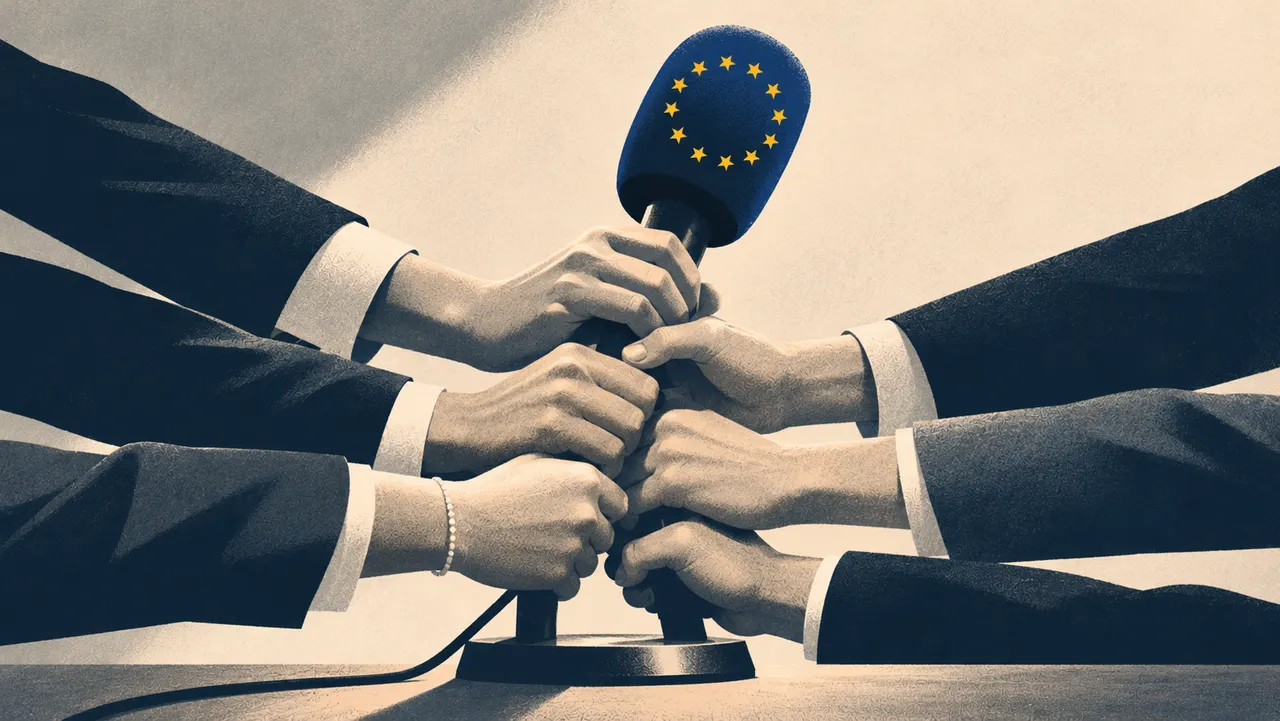
On Friday in Dublin, Europe's leaders were asked who speaks for Europe. They answered with a committee: national security advisers from France, Germany, Italy, Poland and Britain, plus the EU institutions. The Financial Times counted seven. The New York Times counted six. Politico said five plus two. A team that cannot be counted will not be heard.
The treaties settled this in 2009: the High Representative conducts the Union's foreign and security policy, and the President of the European Council represents it among heads of government. Today those jobs are held by Kaja Kallas and António Costa, former prime ministers of Estonia and Portugal respectively, with twelve years in office between them. Europe's team represent, and so answer to, five leaders, three of them facing elections next year, and two Brussels institutions. Kallas's mandate runs to 2029, longer than any government on the team. On Friday she said: "all the member states actually agreed that I'm the one who is representing Europe in foreign and security policies". They did. Then they sent someone else.
There is one, repeat, one senior figure in Europe whose constitutional mandate is to run EU foreign policy, who also gets Russia and will call it what it is. So of course, the leaders of Western Europe, true to their natures, cry: ‘no, we can't have her negotiating with Russia; Russia doesn't want her; Russia wants us, the ones who take its demands seriously.’
Politico's Tim Ross argues these talks are technical, so technical people fit. Of the five, only one country, from Central and Eastern Europe, is sending a "technical person" with any real experience of Russia. Of the others, Britain signed the 1994 Budapest Memorandum, undertaking to respect Ukraine's borders; France and Germany negotiated with Russia over Ukraine for eight years, until the full-scale invasion of 2022 ended the conversation. And look at who Russia sends: Vladimir Medinsky, Putin's aide and co-author of Russia's state history textbook, who said in 2012 that Russians have an extra chromosome.
After Abu Dhabi Medinsky said he wants "a new comprehensive European security system that will serve as a new Yalta and Potsdam". A Russian paper obtained by the New York Times repeats the December 2021 demands, some word for word: NATO back to its 1997 lines, no new members. And it adds one: Britain and France stop extending their nuclear umbrella over their European allies. Bild reported that it also asks Finland to leave NATO. The Kremlin denied that part; Finland's defence minister called it outrageous. It is also not Moscow's call: under Article 13 of the treaty, a member leaves NATO only by its own notice, a year after giving it. Finland's parliament voted 184 to 7 to join.
This is not technical work. It’s Russia’s reach for a new Yalta, and Yalta was drawn over the heads of the people it was about. My parents fled Estonia as the Soviets returned in 1944, months before Yalta was signed. I know what that architecture looks like.
Talk of a "new" security order deserves the flat answer Costa gave on Thursday: "There is no need to reinvent the wheel." Europe had a working security architecture and Russia signed up to every part of it, from Helsinki in 1975 to the Paris Charter in 1990 andthe Budapest promise of 1994 to respect Ukraine's borders. It is Russia that broke it. And why would Russia need a new "security architecture" against NATO, when no NATO member has ever attacked it? Kallas was clear about what is really going on: "diverting the attention away from where it actually should be, which is ceasefire".
So take note, my fellow Balts and Poles: we who border Russia, we who all know what the words "mass deportations" mean. Our representatives will go on being sidelined and go on being treated as second-class, while our knowledge and understanding about Russia and its erstwhile victims remain suspect when set against the fantasies and prejudices of Western Europeans.
But there is hope, at least for those Western Europeans who seem to find it normal to sideline Eastern Europeans. This week's news offers a certain Schadenfreude. On Thursday Donald Trump, Vladimir Putin and Xi Jinping meet in Shenzhen. The White House says Ukraine is not on the agenda. Putin's foreign policy adviser says the settlement will be discussed anyway. Nobody from the European Union, and nobody from the team of seven, will be in the room. Now they know how it feels.
Toomas Hendrik Ilves was President of Estonia from 2006 to 2016. He co-hosts The Continental Rift, a weekly video podcast on European geopolitics, with the American-Estonian comedian Andy Valvur.
Editor’s note
President Toomas Hendrik Ilves and Andy Valvur are great friends of Baltic Takes and we highly recommend the Continental Rift. So do watch their latest show on YouTube, or listen on Spotify, Apple, or wherever you get your podcasts. Make sure you subscribe and also follow the Continental Rift on Twitter/X, Instagram, and Threads. Latest episode below.
